

By: Jerry Bogacz, M.A., M.A.S. | November 16, 2025
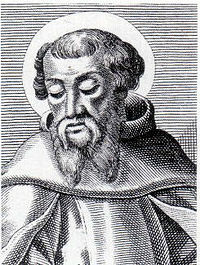
Irenaeus of Lyons (130 AD—202 AD) is the first prominent second-century Greek patristic to engage with Gen 1:26-27 and the image of God. Against Heresies[1] was the first major work of Christian theology and the best surviving description of heretical Gnosticism.
Gnosticism was a diverse and potent theological and philosophical threat from the mid-second century into the third century. It was a sophisticated system of thought that fundamentally challenged Christianity’s core message. Gnostics claimed to possess secret knowledge (gnosis) that revealed the true nature of reality. Gnostic teachings were marked by a strong dualistic bifurcation between the physical and spiritual realms. A supreme God did not create the material world, but by a lesser, flawed deity called the demiurge. This meant that physical creation, including our bodies, was inherently evil or at least inferior. They viewed human embodiedness as an ontological deficit and something to overcome. Salvation is about deliverance from the material world of the demiurge.
Irenaeus directly challenged gnostic teaching that undermined the reality of Christ’s incarnation and rejected most of the Old Testament testing. Irenaeus insisted on the radical simplicity of one God who is both transcendent and immanent. Man made in the image of God was a significant part of his theological gnostic rebuttal. By responding to the gnostic heresy, it must be recognized that Irenaeus’ did so from the perspective of a pastor within a polemical context and not a systematic theologian.
There are three unique aspects to his conceptualization of the image.
Tripartite Anthropology and the Image of God
First, his use of tripartite anthropology: body, soul, and spirit. If one of these is removed, that which has been created could not bear the Imago Dei, but would be something different all together, “as either some part of a man…or as something else than a man.”[2] The Spirit denotes the Spirit of God, and the soul is what animates the human being (the breath) and enables it to receive the Spirit. Irenaeus emphasized that humanity, in its entirety, body, soul, and spirit, bears the image of God. Thomas Weinandy notes, “In contrast to the Gnostics, Irenaeus delighted in the unparalleled and literally incredible thought that human beings, in the totality of who we are, body and soul, are images of God, and were created so by God himself.”[3] With a soul–body unity, humans are imago Dei with their created human structure and the Spirit of God. Now the soul and the spirit are certainly a part of the man, but certainly not the man; for the perfect man consists in the commingling and the union of the soul receiving the spirit of the Father and the admixture of that fleshly nature which was molded after the image of God.[4]
The Integral Nature of the Human Body and the Image of God
Second, Irenaeus argues that the human body is integral to this divine image, which is a direct counter to the gnostic negative marginalization of it.
[Editor's Note: See the works of Thomas Aquinas and his view of hylomorphism for more on the body's relationship to the image of God.]
The Distinction Between "Image" and "Likeness" for the Image of God
Third, he makes a distinction between “image” and “likeness.”[5] Sherlock states, “In order to explain the evident difference between Christ’s perfect, and our marred, human nature, he came to distinguish two aspects of this: ‘image’ (retained after the fall) and ‘likeness’ (which was lost).”[6] The “image” as humanity's rational intellect and free being that is the static component of humanity and survives the fall. The divine “likeness” is the dynamic component. Its restoration is one of the gifts of the Spirit who, through regeneration, activates ‘spirit’ in believers, and so prepares them for full humanity in the resurrection. Sherlock adds,
This was possessed by them [Adam and Eve] only as innocent children, as a promise beginning to be fulfilled; they were not made fully mature but were intended to grow up into a fully mature humanity. It was the desire to accelerate this process that led to their losing this ‘likeness.’[7]
For Irenaeus, the likeness of God is the goal of human life. The fall is partially explained by this original imperfect likeness, and salvation as restoration is understood as reestablishing the original process of growth. Critics have noted inconsistencies in Irenaeus' definitions of image and likeness, as he sometimes used them interchangeably. He acknowledged that sin distorts the Imago Dei in humanity, yet he maintained that the image remains structurally intact. He believed that free will, given by God, allows for the potential of sin, which can damage the divine image. He states, “For the intellect of man — his mind, thought, mental intention, and such like — is nothing else than his soul.”[8] For Irenaeus, “image” is the necessary aspect of humankind that allows for and is open to God’s actions, and “likeness” is the maturity that results from the active involvement of the Holy Spirit.
The Incorporation of Christology into the Image of God
Irenaeus imports Christology into his image/likeness of God conceptualization. He stressed the significance of the incarnation for understanding what it means to be human, and a ‘physical’ understanding of salvation. Irenaeus writes, “Who can be better and more excellent than that man who was made in the likeness of God, besides the Son of God, in whose likeness man was created?”[9] The connection between the body and the image of God is in relation to the human Jesus Christ, who is also the very Son of God and second person of the Trinity. Hence, humanity is made in the image of the incarnate-embodied Son and not the non-embodied Father. It is this typological relationship between humanity and Christ that, for Irenaeus, provides the basis of embodied humanity’s value and worth. Humanity’s bodily form reflects the incarnate Son, linking Christ's incarnation to the essence of being human. The Son's identity as the image of God is central to understanding humanity’s purpose and relationship with God.
Christ as the Archetype for Humanity
With respect to the lost likeness, although Adam precedes Christ temporally, Christ's humanity is the intended archetype for humanity. The Son of God did not begin to exist but was with the Father from the beginning. When He became incarnate and became the means of our salvation; so that what we had lost in Adam, namely to be according to the likeness of God, that we might recover in Christ Jesus.[10] The incarnation of Christ restores humanity's lost likeness moving from a state of infancy in spiritual growth to a mature likeness through redemption. Irenaeus' thought reveals a profound connection between the essence of humanity and the essence of Christ by emphasizing the importance of both physical embodiment and spiritual likeness in the divine image. Irenaeus’s eschatological, forward-looking emphasis is profoundly scriptural. However, his notion of a twofold human nature, corresponding to ‘image’ and ‘likeness’ is unsustainable exegetically, but his usage of the distinction was understandable as he strove to preserve the universality of the image and the consequences of sin[11] with his rebuke of Gnosticism.
About the Author
Jerry Bogacz, MA, MAS

Jerry Bogacz was born and raised in the Chicago area. Jerry and his wife Kathy relocated to Lexington, Virginia in 2015 where they reside to this day. As a scientist, Jerry worked as a research scientist and project manager in immunodiagnostic and DNA diagnostic product development for Abbott Laboratories in northern Chicago. Jerry is a Ph.D. Candidate in the Ph.D. in Theology and Apologetics program at Liberty University. He graduated from Biola University with two degrees–an MA in in Apologetics and an MA in Science/Religion. He was a resident in 2013 at the C. S. Lewis Fellowship at the Discovery Institute. Also, Jerry received training at the Cross Examined Apologetics training in 2014. Ministerially, he served as a pastoral and teaching elder at Evanston Bible Fellowship in Evanston, IL (2001-2015). Jerry’s primary areas of research are focused around the integration of science and theology, biblical anthropology, bioethics, and worldview studies.
Notes
[1] Dated sometime between AD 174 and 189.
[2] AH 5.6.1
[3] Thomas G. Weinandy, “St. Irenaeus and the Imago Dei: The Importance of Being Human,” Logos: A Journal of Catholic Thought and Culture 6, no. 4 (n.d.): 17.
[4] Irenæus of Lyons, “Against Heresies,” in ANF, ed. Alexander Roberts, James Donaldson, and A. Cleveland Coxe (Buffalo, NY: Christian Literature, 1885), 536.
[5] Adversus Haeresis V.6.1; 16.2.
[6] Sherlock, The Doctrine of Humanity, ed. Gerald Bray, Contours of Christian Theology, 82.
[7] Ibid.
[8] AH 2.29.3
[9] Ibid., 4.33.4.
[10] Irenæus of Lyons, “Against Heresies,” in ANF, ed. Alexander Roberts, James Donaldson, and A. Cleveland Coxe (Buffalo, NY: Christian Literature, 1885), 1:446.
[11] Charles Sherlock, The Doctrine of Humanity, 82–83.