

By: Sherene Khouri, PhD | September 14, 2025
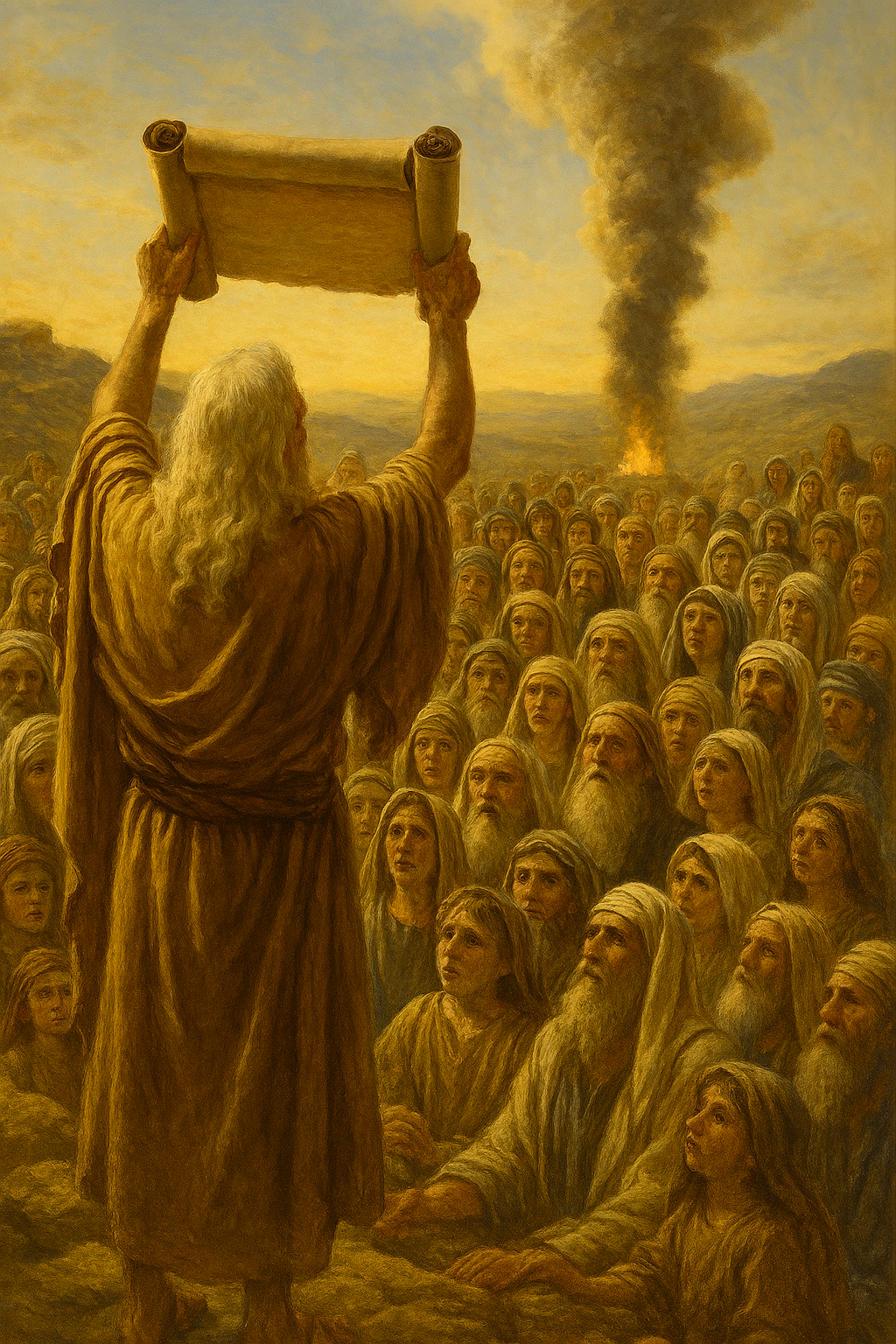
The book of Deuteronomy is also referred to as “the theology book of the Old Testament” because it summarizes the teachings of Moses and the entire Pentateuch books, which also sets the stage for the messages of the prophets who came after it. The book consists of Moses’s farewell address to the nation of Israel and reminds them of what type of people they should be and their responsibility to represent God before all the nations. The purpose of this paper is to argue that the central message of the book of Deuteronomy is Israel’s call to experience a heart transformation, a change that not only shapes their relationship with God but also positions them as a light to the nations.
The Central Theme of the Book of Deuteronomy
This book is considered a covenant document. The word covenant occurs about twenty-five times in this book, and it “designates an enduring agreement or chosen association that establishes a defined relationship between two parties involving a ‘solemn, binding, obligation to specified stipulations on the part of at least one of the parties towards the other.”[1] The Bible lists many covenants (Gen. 21:24–32; 26:14–33; 31:17–55; Josh. 9:3-27; 1 Sam. 18:3-4; 20:8, 16-17; 2 Sam. 3:12-13, 21; 5:3; 21:1-9; 1 Kings 5:12; 15:18–20 ESV).[2] However, the covenant in Deuteronomy refers the reader back to Sinai or Mount Horeb, where God brought Israel into a place of humility and servitude to bring about redemption to all humanity (Deut. 4:13). He reminds them with the covenant that he placed with their fathers and how he designated the tribe of Levi to “carry the ark of the covenant of the Lord to stand before the Lord to minister to him and to bless in his name” (Deut. 10:8). Then, he makes a new covenant with them (Deut. 4:31, 5:2-3) because he is still wanting to use them to declare his name to the nations.[3] The theological message of the book is that God is establishing a new covenant with his people, one that grants them a unique position, ministry, and status. Their position is no longer that of slaves, their ministry is to serve the world, and their status is to be a light to the nations.
Situating Deuteronomy in the Biblical Narrative
The covenant starts with Abraham, when God said, “This is my covenant, which you shall keep, between me and you and your offspring after you: Every male among you shall be circumcised” (Gen. 17:10). Circumcision served as a sign that the nation of Israel was set apart for the Lord, but the sign alone was insufficient; it required the people to live in obedience to God’s law, as outlined in the book of Deuteronomy. This obedience was intended to preserve their holiness, creating a community in which God could dwell among them. In other words, while circumcision served as a sign, it reinforced the idea of holiness and separation from the world to be dedicated to God.
In the Abrahamic covenant, God gave a promise that all the nations of the earth would be blessed through Abraham and his offspring (Gen 12:3; 18:18; 22:18; 26:4; 28:14).[4] Therefore, this covenant is not just for the nation of Israel. It started with Israel as the chosen people of God, but its purpose was never limited to them alone; from the beginning, God had a long-term plan to bring salvation to all humanity through Israel. As Alexandar states, God’s pledge of blessing is “indicative of Abraham’s positive relationship with the Lord and anticipate[s] the divine presence in the midst of the nation of Israel.”[5] In other words, Abraham marks the beginning of God’s work with the nation of Israel and, ultimately, all the nations.
After Moses created new tablets of stone in Deuteronomy ten, he tells the Israelites what they should do with these commandments to live rightly. He states, “What does the Lord your God require of you … to keep the commandments… circumcise therefore the foreskin of your heart and be no longer stubborn” (Deut. 10:12-16). Using a non-physical image of circumcision might surprise the reader that Moses talked about spiritual circumcision before Paul in the New Testament. As Daniel Block states, “Moses’ neglect of physical circumcision in speech and practice raises serious questions about the Judaizers’ comment in Acts 15:1: ‘Unless you are circumcised according to the custom of Moses, you cannot be saved.’”[6] Talking about spiritual circumcision means following the Lord and obeying his commands, and this is prescribed by Moses in the Old Testament.
Since God’s people did not obey his covenant stipulations and did not make his name known among the nations by following his commands, God will establish a new covenant to accomplish his purpose (Isa. 11:9; Hab. 2:14). The New Covenant will serve as the culmination and fulfillment of the previous covenant (Jer. 31:31). In the new covenant, God circumcises the hearts of men so they will love the Lord with all their heart, soul, and will. The new covenant will serve as the culmination and fulfillment of all the covenants displayed in Scripture. This arrangement between God and humanity is known as the ‘everlasting covenant’ (Isa. 55:3; 61:8; Jer. 32:40; 50:5; Ezek. 16:60). Ezekiel speaks of the removal of the stone heart and the insertion of a flesh heart, which results in spiritual transformation (Ezek. 36:26-27).
Through the New Covenant, people would enter into a relationship with God not through their ethnicity, but through a transformed heart generated through faith. In Ezekiel 36:26, God promises Israel, “A new heart I will give you, and a new spirit I will put within you: and I will remove from your fleshly heart of stone and give you a heart of flesh.” These verses cross-reference with Rom. 2:26-29, where Paul considers the real believer, the one who is circumcised inwardly, not outwardly. Paul talks about the uncircumcised who will condemn the circumcised who break the law. The central element of the circumcision covenant seems to be the interior spirituality of the person. The work of the holy spirit will make the uncircumcised, circumcised. This is something any person (Jew or gentile) can experience when they believe in Jesus Christ as their Lord and Savior.
Both Moses in Deuteronomy and Paul in Galatians emphasize that true covenant membership is marked by inward transformation, not merely external rituals like physical circumcision. Moses called Israel to trust and obey God from the heart, anticipating a time when God would circumcise their hearts for full covenant obedience (Deut. 30:6). Paul echoes this idea in Galatians, teaching that faith expressed through love, empowered by the Spirit, is what defines the people of God. The best example of these people is the Gentiles who demonstrated faith in the God of Israel, like Rahab (Canaanite), Ruth (Moabite), Naaman (Aramean), and Caleb (Kenizzite). These people’s hearts were full after and entered into the covenant of faithfulness with God of Israel, demonstrating that faith working through love—which Paul mentions in Gal. 5:6—is a theological trajectory that began in the book of Deuteronomy.[7]
The heart of the covenant relationship between God and his people is rooted in love. Love from God to us, which is the root, and our love to God, which is the fruit. It was out of God’s love that he chose and redeemed Israel (Deut. 7:7-8), and it is by responding in love that Israel was to walk in covenant faithfulness. This covenantal love is not mere emotion but is expressed through obedience and loyalty. This covenant of love continued in the New Testament with Jesus identifying the two greatest commandments Matt. 22:37-40. The renewing of the covenant thus consisted in a continuous commitment in love to God and others. This love is required of every human being at all times, including all races and genders.[8]
Conclusion
The book of Deuteronomy presents Israel’s call to heart transformation as central to its theological message and covenant identity. It emphasizes that Israel is no longer to live as slaves, but as a people called to serve God and the world by reflecting God’s light to the nations. This transformation, marked symbolically by circumcision but it points forward to the New Covenant fulfilled in Christ. Deuteronomy bridges the covenant with Abraham and the promises later echoed by the prophets. God’s long-term plan is universal redemption through a spiritually renewed people, made possible by faith and the work of the Holy Spirit.
About the Author
Sherene Khouri was born into a religiously diverse family in Damascus, Syria. She became a believer when she was 11 years old. Sherene and her husband were missionaries in Saudi Arabia. Their house was open for meetings, and they were involved with the locals until the government knew about their ministry and gave them three days’ notice to leave the country. In 2006, they went back to Syria and started serving the Lord with RZIM International ministry. They traveled around the Middle Eastern region—Turkey, Jordan, Egypt, Lebanon, Syria, and United Arab Emirates.
Sherene was also involved in her local church among the young youth, young adults, and women’s ministry. In 2013, the civil war broke out in Syria. Sherene and her husband’s car was vandalized 3 times and they had to immigrate to the United States of America. In 2019, Sherene became an American citizen.
Sherene is an Assistant Professor at Liberty University. She teaches Arabic, Religion, and Research classes. Additionally, she holds a Ph.D. in Theology and Apologetics, M.A. in Christian Apologetics from Liberty University, and B.S. in Biblical Studies from Moody Bible Institute. Currently, Sherene is also working on a Master of Theology in Global Studies at Liberty University and M.A. in Arabic and linguistics from PennWest University.
Notes
Alexander, T. Desmond, and Desi Alexander. From Paradise to the Promised Land: An Introduction to the Pentateuch. Grand Rapids: Baker Academic, 2012.
Craigie, Peter C. 1976. The Book of Deuteronomy. Bielefeld: William B. Eerdmans Publishing Company. 28
Daniel I. Block. The Triumph of Grace: Literary and Theological Studies in Deuteronomy and Deuteronomic Themes. Eugene: Wipf & Stock Publishers, 2017.
Kimble, Jeremy M., and Ched Spellman. Invitation to Biblical Theology: Exploring the Shape, Storyline, and Themes of Scripture. Grand Rapids, MI: Kregel Academic, 2020.
Merrill, Eugene H. “Deuteronomy.” In The New American Commentary. Vol. 4. Nashville: Broadman & Holman Publishers, 1994.