

By: Tony Williams | July 13, 2025
As a Christian apologist, the idea of fairness is something that you will likely encounter when talking with people about your worldview. It may be phrased differently, such as, “Why do bad things happen to good people”, but that is really a question of fairness. It is pretty easy to see that we live in a world that is often extremely unfair. So, what is fair, and what does that have to do with Christianity?
Background
When you stop and think about it, fairness seems to be a part of everything we know and do. We stand in lines behind others who got in line sooner. Consider that we demand that there be rules that are enforced in our sporting events. We object if a coworker who does less gets paid more. Fairness drives the vast majority of our system of laws. When a young person dies, we talk about how unfair it is that they didn’t get to live a full life. We intuitively recognize when something isn’t fair. We often say instead that something “isn’t right”. When do we learn this?
Kids
If you have ever met a person under 5, you can likely testify to something peculiar. As soon as a child can speak more than two words, they already seem to know about the idea of fairness. I am blessed with two sons who are 14 months apart. Even as toddlers, if I were to give one of the boys something, the other was immediately demanding of the same treatment and ready to expose me as a tyrant if I failed to make things “fair”. They protested when the other stole a toy without anyone teaching them about the ins and outs of property ownership or the legal definition of theft.
One of the more common objections to the idea of God is that the world is such an unfair place that no loving deity would have made things so. A trained apologist such as yourself may respond to this statement by asking where they get their idea of fairness from in the first place. If the universe has no creator, and we are all just a temporarily conscious cosmic accident, why should fairness matter to us?
Legal Fairness
In my years as a police officer, the nature of my work always revolved around fairness. It wasn’t fair when an innocent person was injured by a drunk driver. It wasn’t fair that a person stole an elderly family member’s money. No, it wasn’t fair when a drug dealer profited from the addiction of his client and the misery of his client’s family. So, we did our best to take the offending parties to jail. We had to prove their guilt to a jury or a judge, but if they were found guilty, they paid restitution or went to prison. It was only fair.
The problem was, it was never really fair. The victims were almost never made financially whole, especially when you consider the lost time, emotional toll, and permanent physical or mental scars from being victimized. The suspects often plead out to something far less than the law would prescribe for the offense, especially on a first or second offense. The families of the murdered never had their sons or daughters returned to them.
Jesus and Fairness
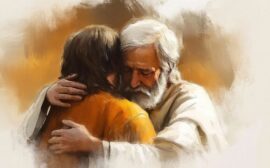
What can we learn about fairness from the recorded life of Christ and the words He spoke? Consider Jesus’ parable about the workers in the vineyard being paid equally for unequal work (Matthew 20). Second, consider the prodigal son being welcomed home to a celebration from his father after squandering his father’s wealth (Luke 15). Third, consider also the parable of judgments on workers for how many talents they gained, or failed to gain, during their master’s absence (Matthew 25). None of these parables seeks to make things “fair”.
Questions about the Parable
Why do those who work less get paid the same? Why should a son who blew his inheritance be given a royal welcome? And, why did the master give unequal talents, and then expect returns beyond what was given?
The Life of Jesus
Now, consider the life of Jesus. This was the Creator of the universe Who chose to live among people who didn’t receive Him, falsely accused Him, and ultimately killed Him despite His miracles that should have made it obvious that He was Who He said He was. He healed many and expected nothing in return. There is not much that one could point to as being “fair” in that story.
The teaching of Jesus, including loving your enemies and praying for those who hurt you, was radical in the society He lived in. They are still radical in our society today. As we talk about Christ with skeptics or those who are curious, they will often be conditioned to seek out fairness and hold that as the ultimate good. However, as Christian case makers, we can help them see that our faith is not in “fairness”. It is about a Creator Who suffered death at the hands of his created, paying the price we owed, so that if we trust in Him, we can join Him for eternity.
Conclusion
Christianity is not about fairness, though it is promised that all things will be made right someday, and all our tears will be wiped away in Heaven (Revelation 21:4). In the end, every saved Christian can be relieved that fairness is not a requirement for reconciliation with our Creator. Despite our sins, we avoid what is only fair: death and separation from our perfect Creator for eternity.
If we trust in Christ, the Master of the universe, we will hear Him say, “Well done, good and faithful servant. You have been faithful over a little; I will set you over much. Enter into the joy of your master.” I pray you will take advantage of the unfair death Christ suffered in our place and find your Creator waiting for you with those words someday.
About the Author
Tony Williams

Tony Williams is currently serving in his 20th year as a police officer in a city in Southern Illinois. He has been studying apologetics in his spare time for two decades, since a crisis of faith led him to the discovery of vast and ever-increasing evidence for his faith. Tony received a bachelor’s degree in University Studies from Southern Illinois University in 2019. His career in law enforcement has provided valuable insight into the concepts of truth, evidence, confession, testimony, cultural competency, morality, and most of all, the compelling need for Christ in the lives of the lost. Tony plans to pursue postgraduate studies in apologetics in the near future to sharpen his understanding of the various facets of Christian apologetics.
(c) 2025. Bellator Christi.